Send us your feedback
Here you can send us feedback on the Maxess-website. Please describe the problem or what’s missing in a clear way, and on what page you found the issue. Thank you so much for your help!
Gaining new insights to increase zinc recovery from waste incineration ash
By using advanced synchrotron-based spectroscopy, researchers from Renova AB, RISE Research Institutes of Sweden and Avfall Sverige gained new knowledge about how zinc is present in fly ash from waste-to-energy plants. The study reveals how zinc occurs in different chemical forms and how these change over time, creating new opportunities to optimise zinc recovery. The results can help increase resource efficiency and support the transition to a more circular use of materials.
The challenge behind metal recovery from waste
Waste-to-energy plants produce fly ash that contains valuable metals such as zinc and copper. Recovering these resources more efficiently requires a better understanding of how the metals occur and behave during extraction. However, the complex composition of fly ash makes it difficult to analyse using conventional methods, creating a need for advanced characterisation techniques.
Combining scientific and industrial expertise
The project brought together Renova AB, RISE and Avfall Sverige to address a challenge directly linked to the circular economy.
Researchers analysed fly ash both before and after zinc extraction using advanced synchrotron techniques at several international research facilities, including MAX IV Laboratory, PETRA III and the Diamond Light Source. The collaboration combined industrial knowledge of zinc recovery processes with expertise in advanced materials characterisation and data analysis.
The work also contributed to greater awareness within the waste-management sector of how large-scale research infrastructure can support resource recovery and sustainable materials management.
Revealing zinc chemistry in detail
To understand how zinc occurs in the ash, the team used X-ray Absorption Spectroscopy (XAS) together with high-resolution nano-XRF and nano-XANES imaging.
These techniques made it possible to determine both the chemical form and the microscopic distribution of zinc within individual ash particles. The methods can distinguish different zinc-containing compounds that cannot be identified reliably using conventional analytical approaches.
By combining spectroscopy with chemical imaging, researchers gained a detailed picture of how zinc is distributed across particles of different sizes and compositions.
“This project has resulted in valuable knowledge about the zinc speciation in fly ash which can influence the recovery process.” Karin Karlfeldt Fedje, Renova AB
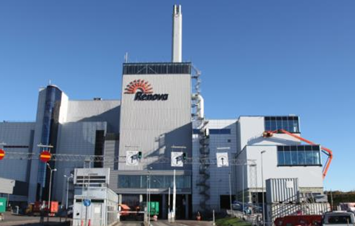
Renovas’ new facility for Zn-extraction.
Results and future potential
The study identified four main forms of zinc in the untreated fly ash: salts, spinels containing iron and aluminium, silicates, and zinc associated with calcium-rich ash components.
Researchers also discovered that zinc speciation changes during storage. Moisture in the surrounding air was sufficient to alter the chemical form of zinc over time, highlighting the importance of sample handling and storage conditions. This finding may also have implications for how ash should be stored before zinc recovery.
The results provide valuable knowledge for improving zinc extraction processes and increasing recovery efficiency. In the longer term, the project supports the transition from landfill disposal towards resource recovery, where valuable metals are returned to the economy instead of being lost as waste.
The work demonstrates how advanced synchrotron techniques can help industry understand complex waste materials and accelerate the development of circular solutions for metal recovery.
This project was funded by Vinnova, Sweden’s Innovation Agency.
Contact Partners
Case Details
Renova, Avfall Sverige
LSRI-initiative at RISEBalderRISE SAXS/WAXS/GISAXS laboratory beamlineNanoMAXBioMAX