



Send us your feedback
Here you can send us feedback on the Maxess-website. Please describe the problem or what’s missing in a clear way, and on what page you found the issue. Thank you so much for your help!
MOCK: Unveiling the Structure of a Novel Iron-Based Catalyst Using P64 at DESY
A research team from the Department of Chemistry at Lund University set out to investigate the local atomic structure of a newly developed iron-based catalyst designed for sustainable ammonia production. Understanding the oxidation state and coordination environment of iron in this material is crucial for optimizing its catalytic performance.
Challenge
The catalyst contains iron at very low concentrations, dispersed in a complex oxide matrix. Conventional laboratory X-ray absorption techniques lacked the sensitivity and resolution required to probe such highly diluted systems under operando conditions.
Solved with X-ray Absorption Spectroscopy
The team turned to the P64 beamline at DESY’s PETRA III facility, renowned for its high photon flux and specialized instrumentation for X-ray absorption spectroscopy (XAS) of highly diluted systems. P64 offers quick EXAFS (QEXAFS) capabilities on the 20–100 ms time scale, high-resolution emission spectroscopy, and the ability to accommodate custom sample environments, making it ideal for in situ and operando studies.
“The high flux and flexible setup at P64 allowed us to collect high-quality EXAFS data on our catalyst in real time, even at iron concentrations below 0.1%,” said Dr. Anna Svensson, lead investigator.
The experiment utilized P64’s dispersive fluorescence X-ray emission spectrometer in von-Hamos geometry, enabling the detection of subtle changes in the electronic structure of iron as the catalyst operated under reaction conditions.
Successful local coordination
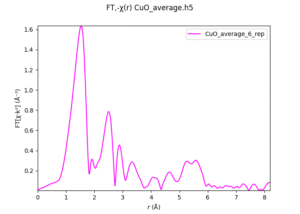
The team successfully resolved the local coordination environment of iron atoms and tracked changes in oxidation state during ammonia synthesis. These insights led to a deeper understanding of the catalyst’s active sites and enabled targeted modifications to further enhance performance.
“Without the sensitivity and speed of P64, these measurements simply wouldn’t have been possible. The beamline staff were instrumental in helping us optimize our setup for these challenging samples,” commented Dr. Svensson.
P64 Advanced X-ray Absorption Spectroscopy, XAS.
Applications: Highly diluted systems, catalysis, bio-molecules, environmental science, and materials research.Features: Quick EXAFS, high-resolution emission spectroscopy, flexible sample environments.
Contact Partners
Case Details
The company name
Advanced and Applied X-ray absorption spectroscopy beamlines P64 & P65SARomics Biostructures

