Send us your feedback
Here you can send us feedback on the Maxess-website. Please describe the problem or what’s missing in a clear way, and on what page you found the issue. Thank you so much for your help!
Using advanced X-ray imaging to improve plant-based meat alternatives
Researchers from AAK, RISE Research Institutes of Sweden, Lund University and Exciscope used advanced X-ray imaging techniques to investigate how healthy fat alternatives behave inside plant-based meat products. By following structural changes during heating, the project provided new insights into how fat influences texture, moisture retention and fibre formation. The findings can support the development of juicier and more appealing plant-based foods that better meet consumer expectations.
The challenge behind plant-based meat
Plant-based meat alternatives play an important role in the transition towards more sustainable food systems. However, consumers often perceive these products as being drier than their animal-based counterparts, particularly after cooking.
One promising solution is the use of oleogels, structured fats that can incorporate healthier oils while maintaining stability during processing and cooking. To optimise these formulations, manufacturers need a better understanding of how fats are distributed within the product, how they affect the formation of protein fibres and how well they are retained during heating.
Studying these processes is challenging because changes occur inside the product and evolve rapidly as temperature increases. Conventional microscopy techniques can provide useful information, but they often struggle to capture structural changes in three dimensions and under realistic cooking conditions.
Combining scientific and industrial expertise
The project brought together expertise from AAK, RISE, Lund University and Exciscope to explore advanced methods for characterising plant-based meat products.
Prototype formulations containing different oleogel-based fat systems were first analysed using laboratory-based tomography and microscopy techniques. These initial investigations helped identify the most promising approaches before testing at large-scale research facilities.
The team then used advanced synchrotron methods at MAX IV Laboratory to examine how product structure changes during heating and to explore opportunities for chemical characterisation of the different components.
Following structural changes during cooking
A key part of the project was the use of 4D X-ray microtomography at the ForMAX beamline at MAX IV. This technique made it possible to continuously image the same region of a sample during heating, providing a three-dimensional view of how the microstructure evolved over time.
The researchers were able to monitor the behaviour of pores and fat-containing regions while simulating cooking conditions. The measurements revealed how the inclusion of oleogels influenced local expansion and shrinkage within the structure.
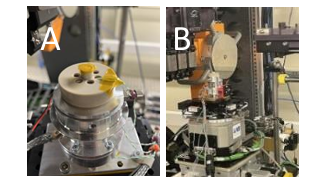
Figure 1: The sample environment designed by Lund University.
A : with a sample. B: at the ForMAX beam line.
Additional investigations were carried out using neutron imaging and X-ray spectro-microscopy. While neutron imaging did not provide the required resolution, the work helped identify future opportunities for complementary analysis.
“Oleogels are a promising technology to support both sustainability and healthier food formulations by enabling lower saturated fat solutions. The advanced visualization techniques used in this project provide unique insights into structural changes during heating.”
Rayo Hernandez Sanchez, AKK
Results and future potential
Initial neutron imaging tests were conducted at the ICON beamline of the Swiss Spallation Neutron Source, SINQ, by beam line scientist Anders Kaestner, but the resolution was too limited to yield further results. Instead, X-ray spectro-microscopy was tested at the SoftiMAX beamline of MAX IV. Finally, X-ray micro- tomography during a simulated cooking step was conducted by continuously acquiring images in-situ during heating at the ForMAX beamline of MAX IV, (see Figure 1). The 4D analysis method using ForMAX allowed the evolution of the microstructure of the meat analogues to be followed during heating. The field of view was 950 x 650 µm and a specific volume was tracked during the heating. The shrinkage or expansion of the specific volume was seen to be affected by the inclusion of oleogels (see Figure 2). The different components could however not be differentiated using X-ray spectro microscopy at the pre-selected energies. In the future another energy level will be used.
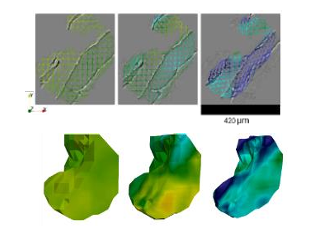
Figure 2: Shrinkage (blue) and expansion (orange) of a pore during heating of a meat analogue. Green denotes the initial size. Scalebar = 420 µm
The project also demonstrated how large-scale research infrastructure can support food innovation by enabling realistic studies of complex food systems. In the future, these methods could become valuable tools for product development, helping manufacturers create healthier plant-based products with improved texture, mouthfeel and consumer acceptance.
The knowledge generated through the project provides a foundation for continued research and supports the development of next-generation plant-based foods that combine sustainability, nutrition and eating quality.
This work was made possible through BEAMS for Industry.
Contact Partners
Case Details
AAK, Exciscope
RISE offer within large scale research infrastructuresExciscopeSoftiMAX4D Imaging LabForMAX